
LOCAL TMJ DENTIST IN MERIDIAN, IDAHO — JAW PAIN RELIEF
4.9 ★ - 178 reviews
5.0 ★ - 18 reviews
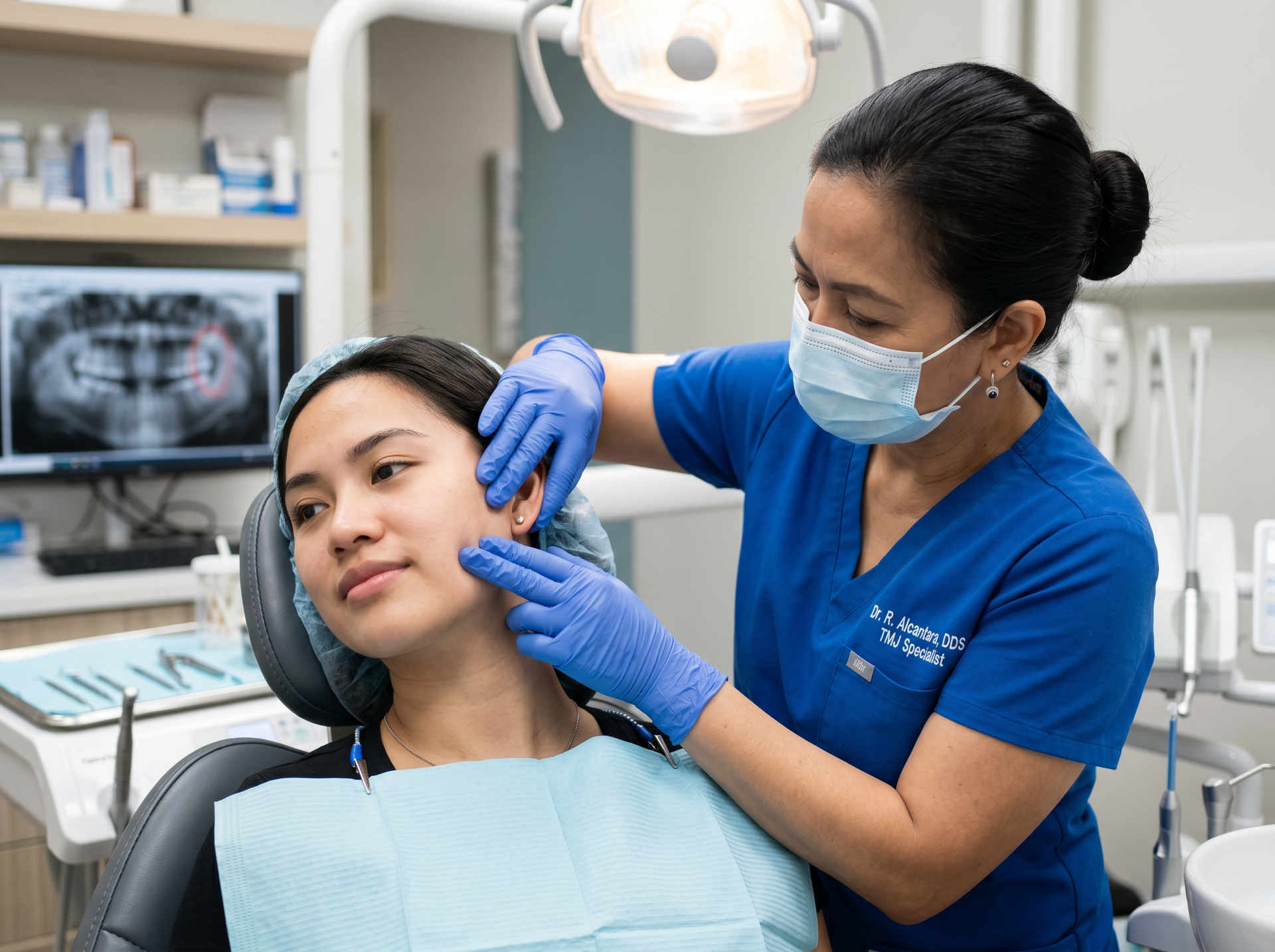
Meridian's TMJ Dentist — Dr. Hill Has Been Treating This for Over 20 Years
Jaw clicks when you eat. Sore in the morning before you even get out of bed. Headaches that start near the ear and spread across the side of the face. A lot of people live with all of this for years and never connect it to their jaw.
TMJ disorder is something we see and evaluate regularly here at Silverstone. First question most people ask when they finally decide to do something about it is whether to call their doctor or their dentist. For most people, start with the dentist. TMJ involves the joint, the bite and the surrounding muscle structure and that is exactly what dentists work with every single day. Dr. Hill has been evaluating jaw pain and TMJ in Meridian for over 20 years. We handle what we can here in the office and when a case needs a specialist we will tell you that directly and point you to the right person rather than guessing our way through something that needs different expertise.
Sound familiar? Call us at
(208) 943-2265. Sooner we get a look at what is going on the clearer the picture tends to be.
What Is TMJ Disorder?
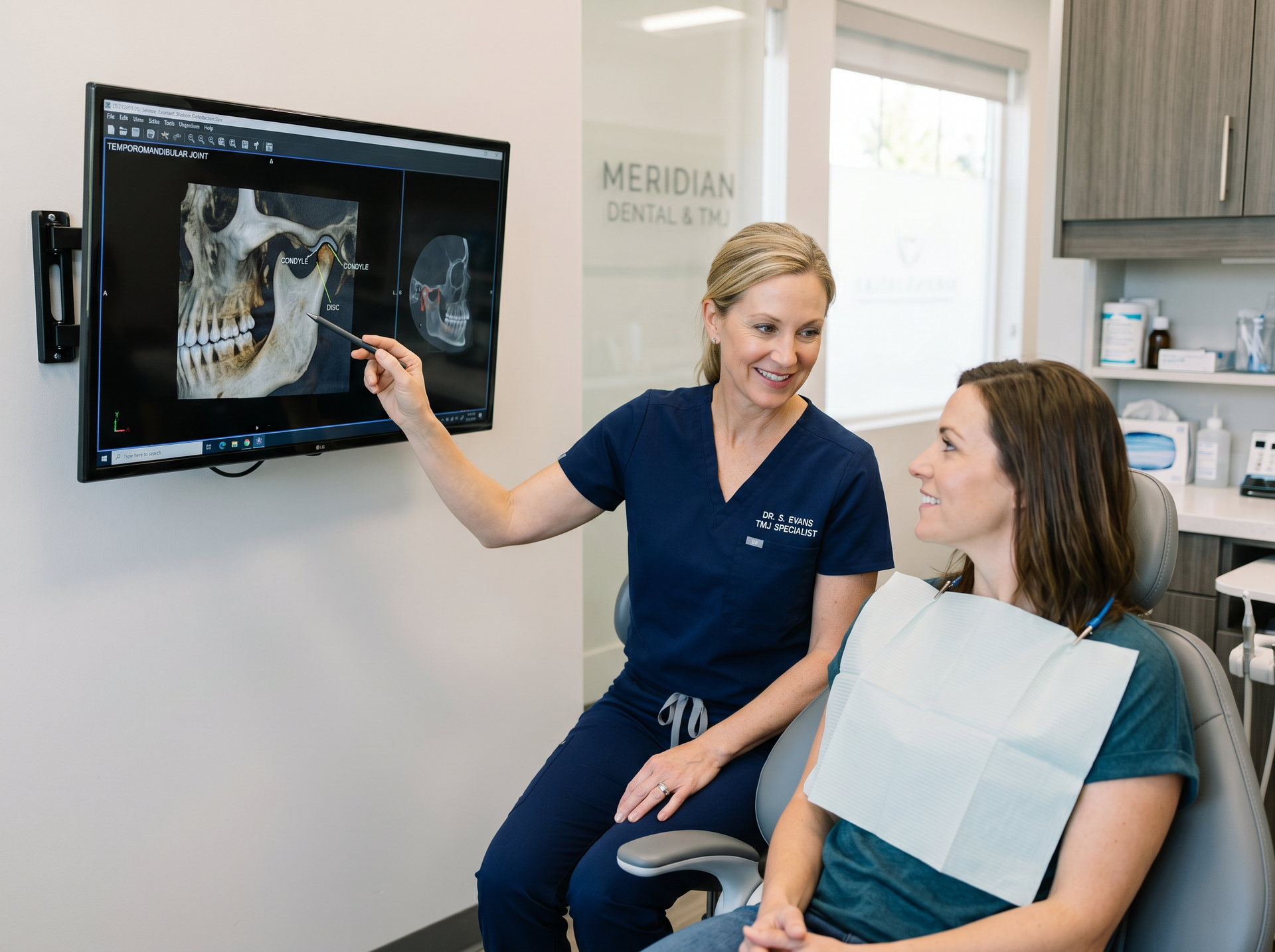
TMJ stands for temporomandibular joint. It is the hinge joint on each side of your head that connects your jaw to your skull. You use it constantly, every time you chew, talk, yawn or swallow. Most people never think about it until it starts causing problems.
TMJ disorder is the term for when that joint, the surrounding muscles or the way your bite comes together is not working the way it should. It can come from grinding your teeth at night, a misaligned bite, jaw injury, arthritis in the joint, or years of clenching under stress. Sometimes there is no single obvious cause and the disorder develops gradually without a clear starting point.
What makes TMJ disorder frustrating for a lot of patients is that the symptoms do not always point obviously to the jaw. Headaches, ear pain, neck stiffness, facial soreness, these are the things people bring to their doctor first and spend months trying to treat without ever addressing the actual source. By the time they get to us a lot of them have already tried medications, physical therapy and other approaches that helped partially or not at all.
The joint itself is one of the most complex in the body. It moves in multiple directions simultaneously and it has to coordinate with your bite, your muscles and your posture every time it functions. When something is off in that system it does not stay contained to one spot, which is why TMJ disorder tends to produce symptoms in places that seem unrelated to the jaw until someone who knows what to look for actually evaluates it properly.
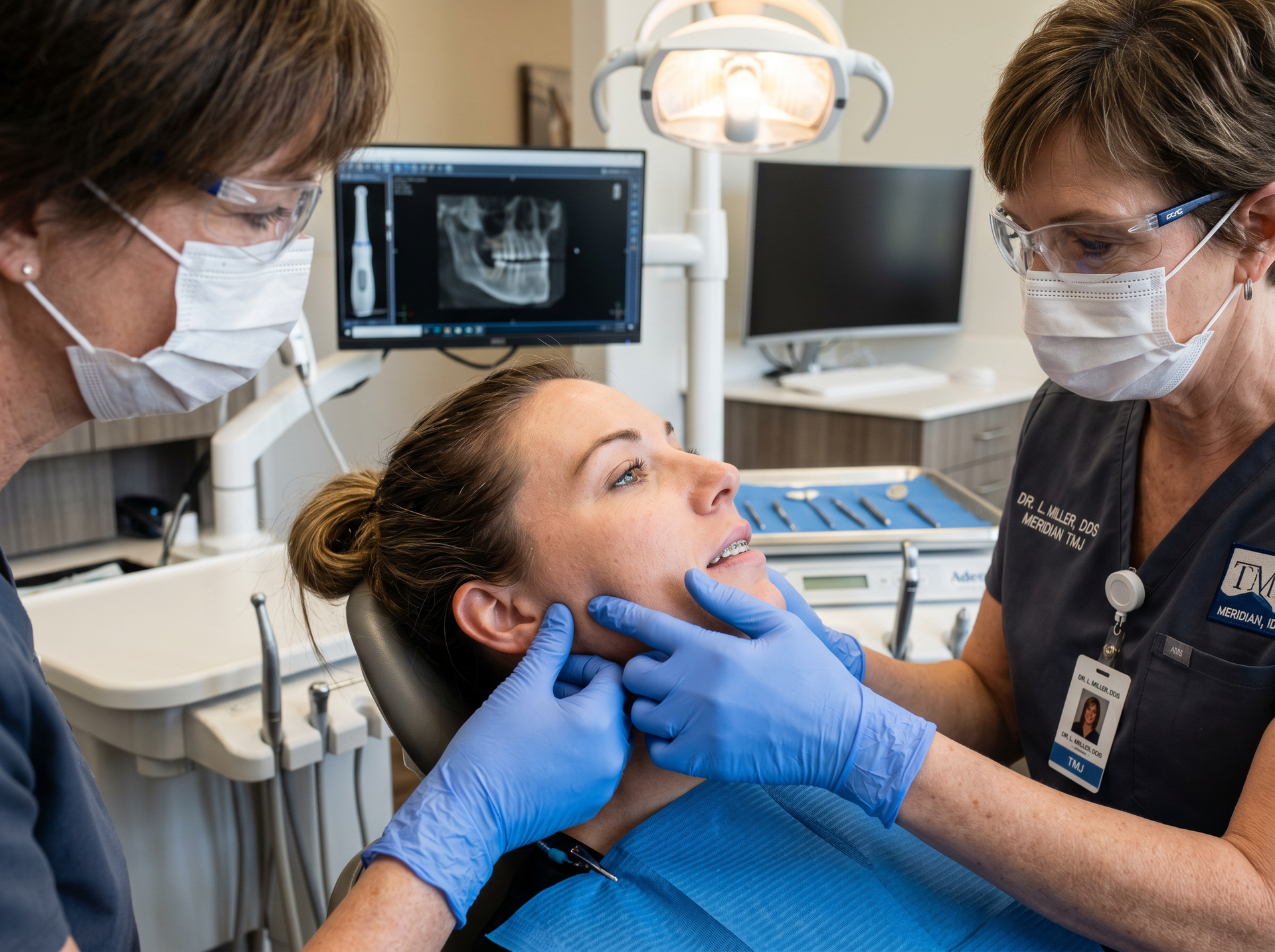
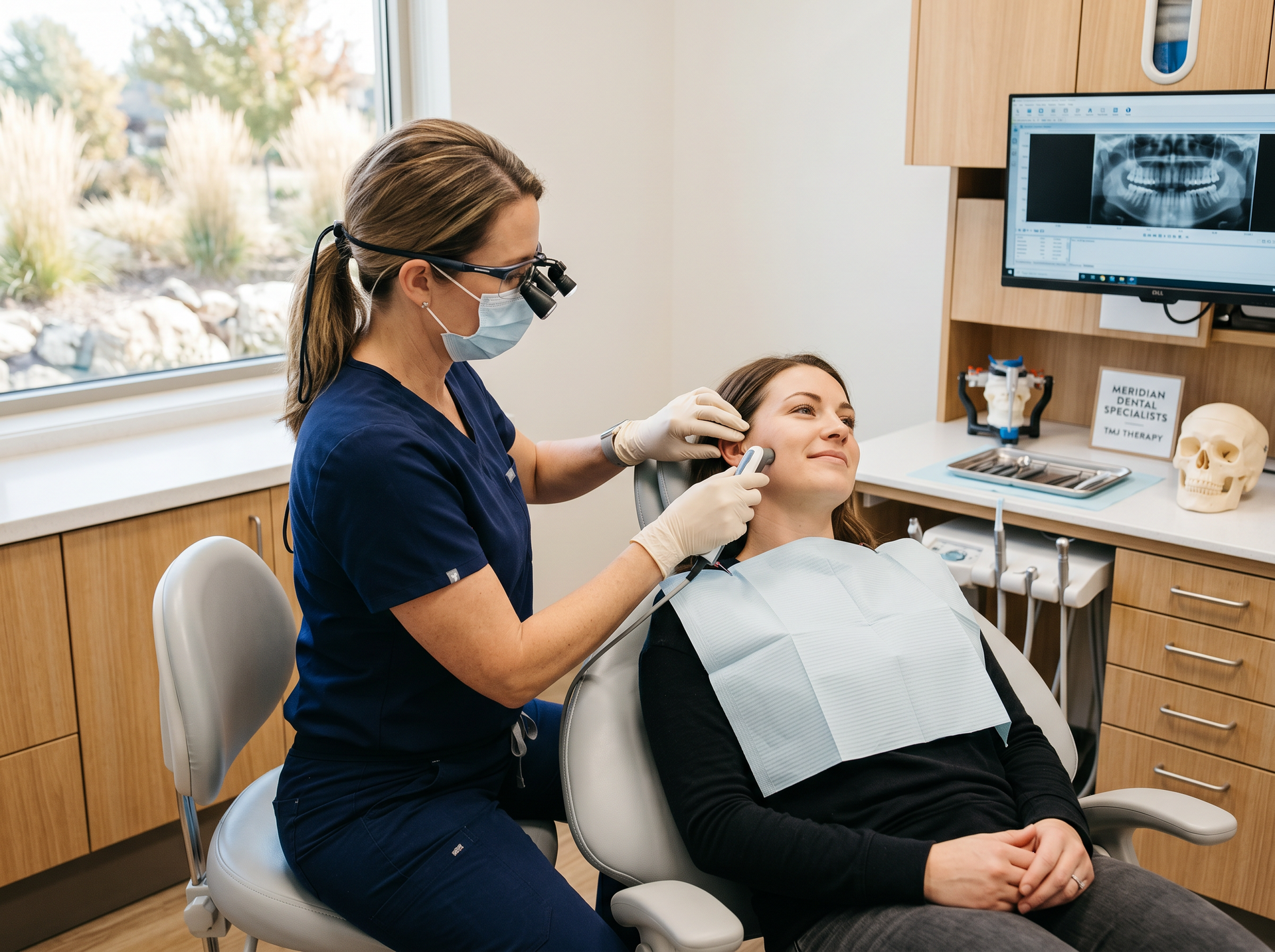
Common TMJ Symptoms We Treat
TMJ disorder does not look the same from one patient to the next. Some people come in with obvious jaw pain. Others have been dealing with headaches for years and had no idea their bite was behind it. Here is what we see most often.
Clicking or popping when you open wide or chew on one side is usually the first thing people notice. Sometimes painless. Sometimes comes with a brief catching sensation before the jaw releases. Most people ignore it for years. That sound is the joint telling you something is off with how it is moving.
Morning soreness is another big one. Aching along the jaw, tenderness in the muscles around the joint, face that feels heavy and tight before you have even had coffee. Patients describe it as feeling like they spent the whole night chewing something. They were asleep.
Headaches starting at the temples or behind the ears. This one surprises people the most. The muscles involved in jaw function connect directly to the head and neck and when they are chronically overworked from grinding or a bad bite they send pain to places that feel nothing like a jaw problem. Patients who have had unexplained frequent headaches for years come in and find out the jaw was driving them the entire time.
Ear pain with no infection present. Ringing, fullness, muffled hearing. The TMJ sits right in front of the ear canal. When the joint is inflamed symptoms land exactly where an ear infection would. People spend months treating the wrong thing.
Grinding and clenching at night. Most people have no idea they are doing it until a partner mentions it or we notice wear on the enamel during a cleaning. Grinding stresses the joint, joint gets inflamed, body responds with more grinding. Worn enamel, cracked fillings and increased sensitivity are usually the first visible signs before a patient even mentions jaw pain.
Jaw that locks or will not open fully. Range of motion that has been getting quietly more limited over time. This is the more advanced end and the earlier we catch it the simpler the treatment tends to be.
Neck and shoulder tension that does not respond to massage or physical therapy. The jaw and neck muscle systems are connected and chronic jaw tension travels. If nobody has looked at the jaw yet that tension is not going anywhere no matter how many times the neck gets worked on.
Should You See a Dentist or a Doctor for TMJ?
Most people call their doctor first. Makes sense given the symptoms. Jaw pain, headaches, ear pressure, those all sound medical. Doctor runs tests, everything comes back normal, patient is back where they started.
TMJ is a dental problem. The joint, the bite, how the teeth come together, the muscle patterns built up from years of grinding at night. That is what dentists work with every single day. A general practitioner can prescribe something that takes the edge off temporarily. What they cannot do is look at how a bite is functioning and figure out why the joint is struggling.
Lot of TMJ patients end up at an ENT first because the ear symptoms point there. Ear pain, ringing, fullness with no infection present. ENT clears everything, patient leaves with no real answer. Jaw was behind it the whole time.
Some end up at a neurologist because the headaches are significant. Ruling things out is not wrong. But when that workup comes back clean and the headaches keep showing up every week, the jaw is usually where to look next. Often the last place anyone thought to check.
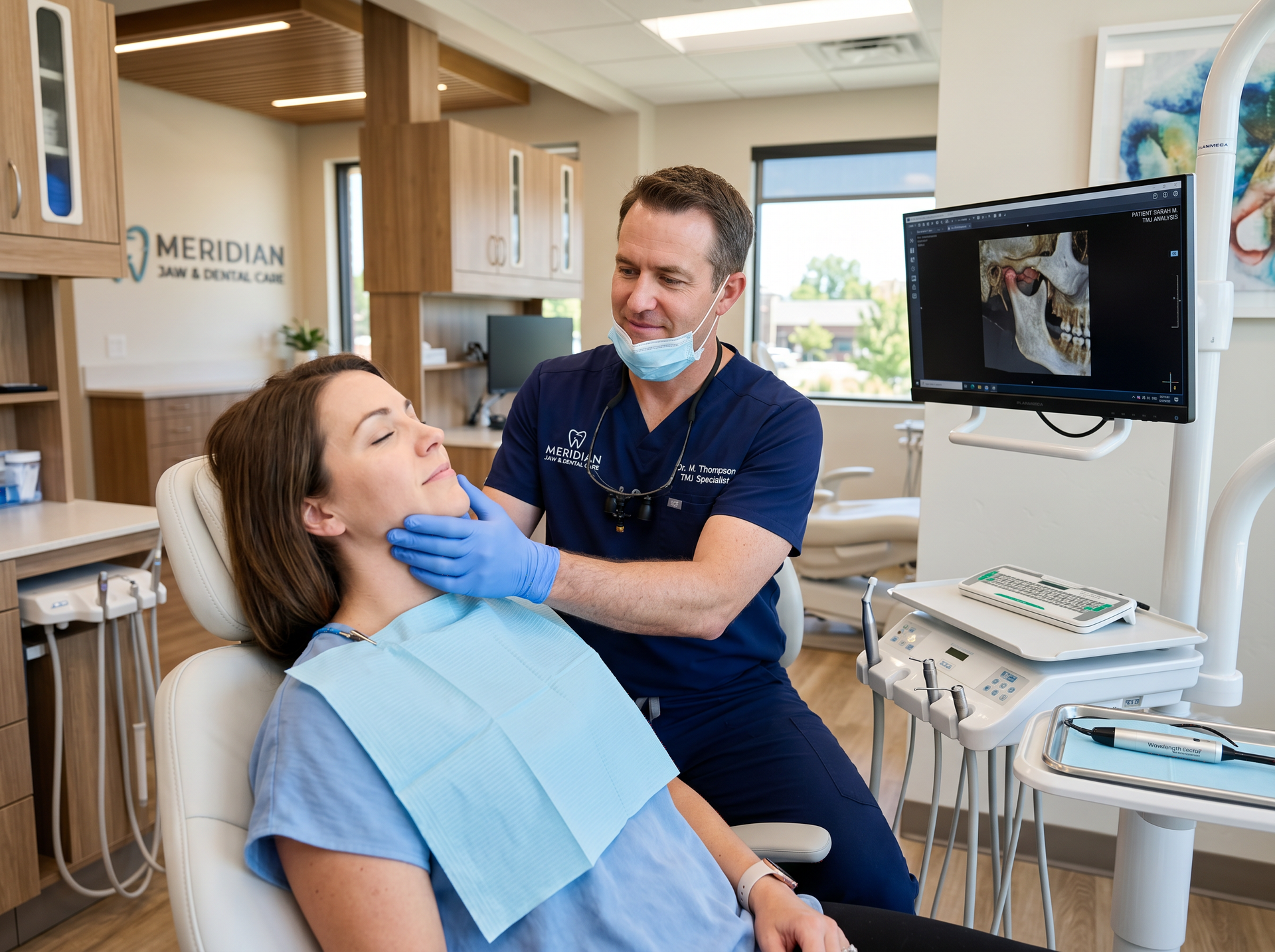
Dr. Hill looks at TMJ from a dental standpoint. Bite, joint mechanics, wear patterns, muscle tension in the jaw and face, how all of it connects. In a lot of cases the picture comes together quickly, especially for patients who have been dealing with this for years without anyone actually evaluating the jaw itself.
Some situations do need medical involvement alongside dental treatment. Significant arthritis, structural damage, symptoms that do not fit a mechanical or bite-related cause. When that is the case we say so directly. But most TMJ presentations we see in Meridian get a clear answer from the dental evaluation and do not need to go further than that.

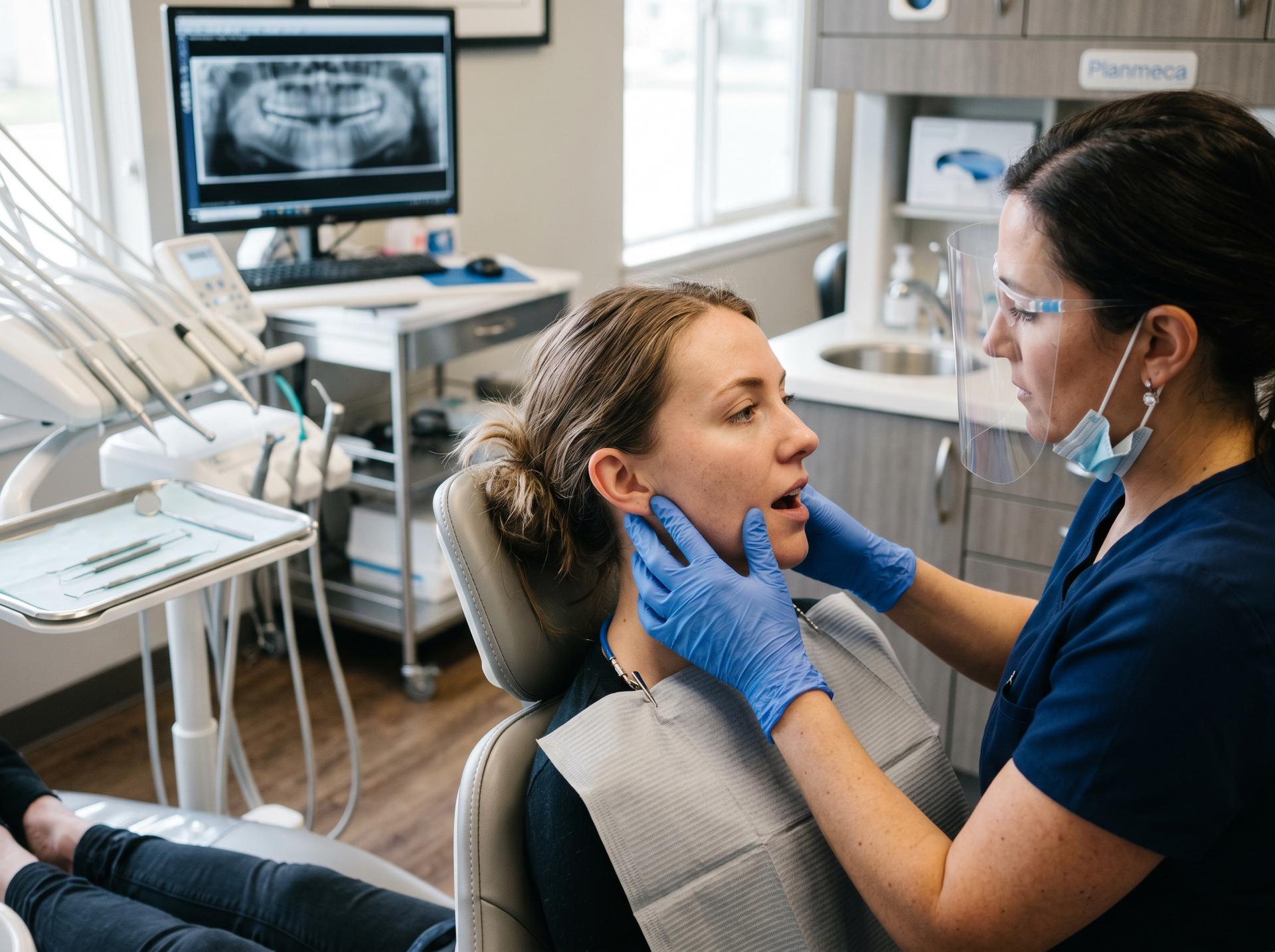
TMJ Treatment Options at Silverstone
Treatment depends on what is actually driving the problem. Not every TMJ case looks the same and not every case needs the same approach. Here is what we use most often at Silverstone and why.
Custom night guard is where we start most of the time. The majority of TMJ patients we see are grinding or clenching at night and putting more force through that joint than they realize. A properly fitted night guard takes that load off the joint while they sleep. Not a drugstore tray. An appliance made from an impression of your actual bite that positions the jaw in a way that reduces muscle activity through the night.
The difference between a custom guard and an over the counter one matters more than people expect. Generic guards do not account for your individual bite. Some actually make clenching worse by giving the muscles something to work against. We see patients who have been using store bought guards for years and still wake up with jaw pain every single morning.
Oral appliances come into the picture when airway and sleep are part of what is going on alongside the jaw symptoms. TMJ disorder and sleep apnea overlap more than most people realize and treating one without looking at the other often gets incomplete results. Dr. Hill evaluates both when the presentation suggests there may be an airway component involved. More on how oral appliances work for sleep and breathing is on our sleep apnea page.
Bite adjustment is sometimes necessary when the way the teeth come together is directly contributing to the joint stress. A bite that is off even slightly changes how the muscles compensate every time the jaw closes and that compensation over years does real damage. Bite adjustment reshapes specific tooth surfaces carefully so the jaw can close in a more balanced position. Small incremental changes, not dramatic reshaping.
Restorative work comes into play when grinding has worn the teeth down enough to change the bite height. Worn teeth alter how the jaw closes and restoring that lost structure with crowns brings the bite back to where it should be. Longer process but it addresses the source rather than just managing symptoms on top of a problem that is still there.
We do not jump to aggressive treatment on a first visit. Conservative management first. Night guard, bite evaluation, see how the joint responds. A lot of patients feel real improvement within the first few weeks and never need anything beyond that.
Why Meridian Patients Choose Silverstone for TMJ
Silverstone Family Dental takes a conservative, evidence-based approach to TMJ care right here in Meridian.
TMJ is one of those conditions where who you see matters. We hear from patients regularly who spent months going from provider to provider, getting told everything looked fine, before finally ending up here and getting a real answer.
Dr. Hill has been on Eagle Road for over 20 years. When you come in with jaw pain we evaluate what is going on, treat what we can here in the office and if the situation needs a specialist we tell you that directly and make sure you get to the right person. What we do not do is guess our way through something or keep you in treatment that is not moving the needle.
We also do not start with the most aggressive option. Night guard first. See how the joint responds. Move further only when it genuinely needs to go further. Patients who have been overtreated somewhere else tend to notice this pretty quickly.
4.9 stars across 181 Google reviews. Patients who have been coming here for ten and twenty years. One patient came in originally having avoided dentists for over a decade because of anxiety and has been here ever since. That does not happen at a practice that treats people like appointment slots.
For patients dealing with jaw symptoms and sleep issues at the same time, the connection between jaw function and airway is something Dr. Hill looks at together rather than as two separate problems. Our sleep apnea page covers that overlap in more detail for anyone whose symptoms include snoring or restless sleep alongside the jaw pain.
TMJ Questions We Hear A Lot
What is TMJ disorder?
It is a problem with the joint that connects your jaw to your skull, or the muscles and bite around it. Clicking, facial pain, headaches, ear pain, grinding. Develops gradually in most cases and the symptoms tend to point somewhere other than the jaw which is exactly why it gets missed for so long.
Should I see a doctor or dentist for TMJ?
Start with a dentist. The joint, the bite, the muscle structure around the jaw, that is dental territory. A general practitioner can prescribe something for pain but cannot look at how the bite is functioning or figure out why the joint is under stress. Dr. Hill has been evaluating jaw pain in Meridian for over 20 years. Come in, we take a look, we tell you what we are seeing and what we think needs to happen.
What does TMJ feel like?
Different for everyone honestly. Clicking or popping when you open wide. Morning soreness and facial heaviness before coffee. Headaches near the ear. Ear pain with no infection. Neck tension that does not respond to massage. Sometimes several of these at once. Sometimes just one that keeps coming back. If nobody has looked at the jaw yet that is worth changing.
Can TMJ go away on its own?
Sometimes a mild case settles down if it was triggered by something short term. More often it is a mechanical problem with the joint or bite that does not resolve on its own. Grinding continues, joint takes more stress, things slowly get worse. Earlier we look at it the simpler the path tends to be.
What does TMJ treatment involve?
Depends on what is driving it. Most cases start with a custom night guard. Takes the force off the joint during sleep and for a lot of patients that alone makes a significant difference within the first few weeks. From there it depends on what the evaluation shows. Bite adjustment, oral appliances, restorative work if grinding has worn the teeth down significantly. We start conservative and only move further when it genuinely needs to go there.
Does TMJ affect sleep?
It can and it goes both ways. Grinding at night stresses the joint and breaks up sleep quality. Airway issues can also drive clenching as the body works to keep breathing during sleep. For patients dealing with jaw symptoms and sleep problems at the same time Dr. Hill looks at both together. Our sleep apnea page covers that connection in more detail.
How long does treatment take?
Some patients feel real improvement within a few weeks of starting a night guard. Others take longer depending on how long things have been developing and what treatment is involved. We give you a realistic picture based on your specific situation, not a generic timeline that may have nothing to do with what you are actually dealing with.
Does insurance cover TMJ in Meridian?
Varies by plan. Some cover diagnostic evaluation and certain appliances. Others do not cover TMJ at all. We verify your benefits before anything starts and walk you through exactly what your plan covers so there are no surprises after the fact. No insurance? Our in-office Patient Benefit Program includes a 20% discount on most procedures.
Book Your TMJ Consultation at Silverstone
Jaw pain, clicking, headaches that keep coming back, ear pressure that nobody has been able to explain. If any of that has been going on for a while and you have not had your jaw properly evaluated yet, that is the place to start.
Dr. Hill has been seeing patients on Eagle Road in Meridian for over 20 years. We look at what is going on, tell you what we think is driving it and give you an honest picture of what treatment makes sense for your situation. If it is something we handle here we tell you that. If it needs to go somewhere else we tell you that too and make sure you get to the right person.
Not a long drawn out process to get started. Call us, get on the schedule, come in and we take a look. That is it.
Call (208) 943-2265 or stop by at 2026 S Eagle Rd, Meridian, ID 83642. Monday and Tuesday 8am to 5pm, Wednesday 7:30am to 4pm, Thursday 7:30am to 5pm.